Saturday, June 6, 2009

A musician is born

6.6.09

A musician is born

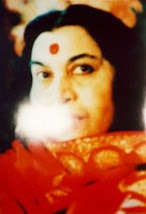
The noted bhajan singer Sanjay Talwar describes an early encounter with Shri Mataji:

My first musical encounter with the Adi Shakti happened in the car in which I drove Shri Mataji to the interior of Rajasthan. It was a cold December morning in 1986. Shri Mataji had woken up early at the residence of Mrs. Pardal, the Sahaja Yoga leader for Jaipur, and had sent word to me to get ready to drive Her through the heart of Rajasthan, as She had fixed appointments with various house owners to see their homes which had jharokas (artistically hand-crafted windows), that She wanted for making Her own home, Pratishthan in Pune. 

I had woken up that morning with a severe stomach ache. I did not want to miss the golden opportunity of driving Shri Mataji and so I did not disclose my problem to anyone. We left early morning with my wife, Aradhana, Manish Singh and Mrs. Pardal sitting at the back, and Shri Mataji opting to sit in the front seat next to me. I had a small Fiat car with two bucket seats in the front. It was not just an ordinary journey, but really the journey of my life had just begun. 

Remember, I had an upset stomach. As I started to drive, my stomach started rumbling and I was in pain. Shri Mataji immediately asked me to stop the car, although I wasn't complaining. She got out of the car and went across to a nearby medical shop and brought me some Ayurvadic tablets. She asked Manish to fetch me some buttermilk. As soon as I had it, I immediately felt better. 

“Now,” She said, “it is a long journey ahead, so why not have a song from you?" That was the first time ever I got to sing in front of Shri Mataji. I asked Her, “Mother, what would you like me to sing?” She said, “Sing any song you like.” So I started singing Hamein Tum Se Pyaar Kitna. It was a romantic song from an Indian film. 

She interrupted me briefly and told me to try changing the words a little so that it could be directed to the Devi. I could not fathom what She meant and I just stopped singing. She then gave me the words, which my wife started to jot down in the back seat. Thus started a journey where Shri Mataji continued to give the words and I continued to sing them. The meanings that came out were simply divine. She would stop in the middle and ask everyone in the car to check the vibrations. She then explained to me the meaning of the words. 

I shook my head and said, “Yes, Mother, this sounds great. Can I do more such songs?” “Yes,” She said. “Now you carry on making the songs as we drive along and make sure that what you are creating is what the seekers will listen to and take their Self Realization.”

I was thrilled at the prospect – all this, while Mother kept Her hand on my Vishuddhi from the back, sometimes massaging my shoulders and at times running Her hand over my back Agnya. She would occasionally ask me, “How does it feel? Don't you feel your voice opening up?” “Yes, Mother!” I exclaimed. “I cannot believe this is my voice.” 

Shri Mataji had worked on my Vishuddhi for hours as I drove. That day we travelled for twelve hours non-stop until we reached Makrana. Thus were born my very first Sahaj musical compositions.
With permission from SAHAJ A-Z

What is the meaning of Nirmala?

1. What is the meaning of Nirmala? 

It is the Name of the Goddess which means without impurity. Shri Mataji gave a comprehensive explanation of Her name in a conference in Marathi translated into English: (This was then translated into French, and back again into English)

Nirmala integrates the three gunas. NI for the right channel, LA for the left 
and MA for Sushumna. 

"The first part, NIH means negation. It is the negation. It is the 
negation of existence, which is illusion, maya (...) NIH shakti is the power of
Shri Brahmadeva, ie Shri Shakti Saraswati. NIH implies complete 
detachment. You must become completely detached. " 
"LA comes from Lalita which is a blessing and a weapon of the Goddess. When the Shakti 
becomes Lalita, meaning active, then the vibration increase in Her, these
are the vibrations you feel in the palm of your hands (...). When the 
power of love becomes active, it becomes LA Shakti. It is LA Shakti that does
all the work, it is thanks to Her that you have your Realisation. " 
"Shakti is the power of love. It is activated by NIH Shakti which is the 
power of action. " 
"The syllable MA is between NIH and LA. MA is the syllable of Mahalakshmi which is the 
power of the Dharma and the power of evolution. In MA Shakti, you must 
understand, assimilate and this requires mastery. 
For example, an artist conceives the idea of his creation with LA Shakti, he 
constructed with NIH Shakti and then uses MA Shakti to bring it to his original idea while improving it. This improvement is evolution and this implies an effort. 
The two powers (NIH and LA) only become active when you develop
by the power of evolution. You must fully understand and develop MA
Shakti. You must achieve a balance between the NIH and MA Shaktis." 
"MA is the first syllable of Mataji, Mother. This has been made possible only through
MA Shakti within me. This would not have been possible with only the LA
Shakti and Shakti NIH. I have come with these three powers but it is MA  Shakti
which is at the summit." 
(Shri Mataji Nirmala Devi) 
************

Friday, April 3, 2009

Sahaja Meditation Online

Online learning will take you on a journey in which you will learn the first steps towards the purest form of meditation, Sahaja Meditation. All knowledge and experience are introduced through videos and audio recordings. All the images, music and sounds of nature are so chosen to help guide you and to give you a feeling of peace.

This online course is an introduction to Sahaja Meditation and focuses on the awakening of the kundalini energy, achieving the state of mental silence, feeling the vibrations of your chakras and your inner being, and eventually learning how to meditate.

Make some time if you want to experiment at home. Because what you could find is something which can give your life a new dimension, a new meaning.

© Copyright Freemeditation.ca | Online Learning 2009 |

Friday, March 27, 2009

Christ & Kundalini

Contrary to popular Christian dogma, Christ did teach about Karma, reincarnation, self-realisation and the Divine Feminine as Holy Ghost -- God the Mother. Christ's teachings are more Eastern than the Churches would have us believe or would like to admit.

The two centuries after Christ, saw the Christian Gnostic teachings of spiritual awareness disseminated alongside the blind faith doctrines of Paul's formulation. In the third Century, the Roman Church's council of Nicaea acted to stamp out the Gnostics and their anti-dogmatic approch to spirituality.

The Gnostic's were declared heretical, their texts destroyed and the Gnostics themselves persecuted into extinction. However, a small amount of Gnostic teachings survived, hidden in caves or in watered-down form in other "heretical" texts (broadly labelled as "Apocrypha").

The Christian Gnostics practiced a spirituality more similar to Eastern traditions than to the Western Christianity we know today. "Gnostic" is Greek for "knower" and it is "Gnosis" or "Knowledge" that they were seeking. Unlike the blind faith demanded by today's Churches, 'Gnosis' meant direct, mystical experience of the divine, which was to be found by individual spiritual evolution to Self-Realisation, and not within the confines of intellectual dogma. The experience of Gnosis was trans-rational and non-intellectual.

From the Nag Hammadi Library, the Book of Thomas, Christ tells us "For whoever does not know self, does not know anything, but whoever knows self, already has acquired knowledge about the depth of the universe". Compare this with a tract from the Upanishads, the Indian metaphysical treatise on Self Realisation: "It is not by argument that the self is known... Distinguish the self from the body and mind. The self, the atman, the highest refuge of all, pervades the Universe and dwells in the hearts of all. Those who are instructed in the self and who practice constant meditation attain that changeless and self effulgent atman ( spirit/ self). Do Thou Likewise, for bliss eternal lies before you..."

In another gnostic text, the Secret Gospel of Thomas, Christ promises us spiritual fulfilment "I shall give you what no eye has seen, what no ear has heard, what no hand has touched and what has never arisen in the human mind." This description is not unlike the Upanishadic experience "the Self is devoid of birth and death, it neither grows old nor decays and the accidents of life do not affect it. The Self transcends space and time; what is great is not too great for it to comprehend and what is small is not too small to escape its attention. It is the Self of All".

Just as Christ warned us against sin and encourages moral perfection in the pursuit of spiritual fulfilment, so too do the Eastern texts "No intellectual acumen can help one realise it, it can be realised only by those who surrender to it and who make themselves worthy by grace, by desisting from all that is sinful, who engage in the practice of perfection by constant meditation"( Upanishads).

The most ancient Eastern spiritual texts, the Vedas,of India, tell us that the process of spiritual awakening by which one attains truth -awareness is called 'Self-Realisation'. The Self Realised person lives in direct experience of reality -- this is called "Jnana" ( a traditional sanskrit word meaning 'knowledge' or 'Gnosis'). Such a person is called a "Jnani" ('knower ' or 'gnostic' ) or "dwijaha" ('twice born'; first from a human mother to the earthly plane then secondly as a child of the Goddess, or Divine Mother, who gives the seeker their second, spiritual birth, Self Realisation, into the plane of mystic awareness- gnosis! ). The traditional Indian texts extol the 'Divine Mother' as the Cosmic Matriarch, bestower of the highest treasure of Self Realisation upon Her deserving children. Many Indian mystic traditions say this same goddess is represented within the human being as the divine feminine power called Kundalini.

What of Western tradition? In the Secret Book of John Christ explains that human redemption before the Heavenly Father occurs by the mediation of a Divine Feminine principle, which he calls the Earthly Mother. It is the Earthly Mother who removes the sins of the children that they can become worthy of their divine heritage; "when all sins and all uncleanesses are gone from your body, your blood shall become as pure as our Earthly Mother's blood and as pure as the river's foam sporting in the sunlight. And your breath shall become as pure as the breath of odorous flowers; your flesh as pure as the flesh of fresh fruits reddening upon the leaves of trees; the light of your eye as clear and bright as the brightness of the sun shining upon the blue sky. And now shall all the angels of the Earthly Mother serve you and your breath, your blood, your flesh shall be one with the breath, the blood and the flesh of the Earthly Mother, that your spirit also become one with the Spirit of your Heavenly Father. For truly no-one can reach the Heavenly Father unless through the Heavenly Mother. Even as the newborn babe cannot understand the teaching of his father until his mother has suckled him, bathed him, nursed him, put him to sleep and nurtured him". The Earthly Mother is a divine mediator through which the seekers, the Sons of Man, are raised to the Heavenly Father. Another part of the same text says "Honour your Earthly Mother and keep her laws that your days may be long on this earth and honour your Heavenly Father, that eternal life may be yours in the Heavens. For the Heavenly Father is a hundred times greater than all the fathers by seed and by blood, and greater is the Earthly Mother than all mothers by the body". The Holy Trinity, then is God the Father, God the Son (ie. Christ) and, it seems, God the Mother. The Divine Mother particularly is the means and power of spiritual evolution.

The Secret Book of John relates Christ's description of the Divine Feminine as the power of God Almighty. "She is the first power. She preceded everything, and came forth from the Father's mind as forethought of all. Her light resembles the Father's light; as the perfect power She is the image of the perfect and invisible Virgin Spirit. She is the first power, the glory, Barbello, the perfect glory among the worlds, the emerging glory, She glorified and praised the Virgin Spirit for she had come forth through the Spirit. She is the first thought, image of the Spirit. She became the universal womb, for She precedes everything, the common parent, the first humanity, the Holy Spirit". The Holy Spirit is here described as the Divine Power of God Himself. This power is maternal in its character (universal womb, She, the common parent) and all powerful as the 'first emanation of God'. More so, She is pure (Virgin) and She glorifies purity. So ancient christian tradition seems to tell us that the holy spirit is actually the Divine Mother!

One cannot overlook the Eastern parallels. God Almighty in Indian mythology is represented as Sada-Shiva. His state is eternal perfection (Sat Chit Ananda). His power is the Adi Shakti (primordial power) who is His feminine counterpart or spouse. It is She who does all things. She created the universe and the gods who attend over it (for example, the triune Shiva, Brahma, Vishnu). The Adi Shakti is the Mother of all things. She gave birth to the universe and is the feminine power of every deity and celestial being (usually represented as their spouse). The Secret Book of John parallels this "She became the universal womb, for She precedes everything, the common parent, the first humanity, the Holy Spirit, the triple male (Shiva, Brahma, Vishnu?) the triple power (Parvati, Saraswati, Lakshmi, who are spouses of the triple males-or the triple Goddess of Western mythological tradition?)". Thus the Christian mystics understood that the Holy Spirit is the Divine Feminine, the Goddess, the Universal Mother herself. The Syriac Christians worshiped the Holy Ghost as the Great Mother. Phillip suggests that Mary Herself is the Holy Spirit (for who else but God the Mother can give birth to God the Son?). Other Apocryphal Scriptures describe Mary as the focus of Temple activities. Her early life was punctuated by auspicious portents all implying her own Divinity.